
The Bakerdex — Entry 01: The Glaze Matrix
A visual guide to how fat and liquid actually change glaze behavior.

What is the Bakerdex?
The Bakerdex is an ongoing index of baking frameworks, comparisons, and concepts. Each entry stands on its own, but together they form a growing reference for how we can think about baking. Discussion is encouraged :)
I’ve made a lot of glazes that should have worked.
Same ingredients. Similar ratios. Same bake.
One comes out glossy and smooth. Another sets dull. Another looks right for five minutes and then goes cloudy.
Most glaze recipes don’t really explain why that happens. They usually stop at “mix and pour,” which is fine… until it isn’t haha.
So this is me trying to stop guessing.
What this is (and what it isn’t)
This isn’t a recipe and it’s not even finished.
The Glaze Matrix is a reference tool I’ve been building to help think about glazes based on outcomes, not just ingredients.
Instead of starting with “what do I have?”
It starts with “what do I want this glaze to do?”
Shiny or matte.
Thin or thick.
Soft-set or firm.
The Matrix just maps how a few key variables interact so you can make a better call before you make a glaze.
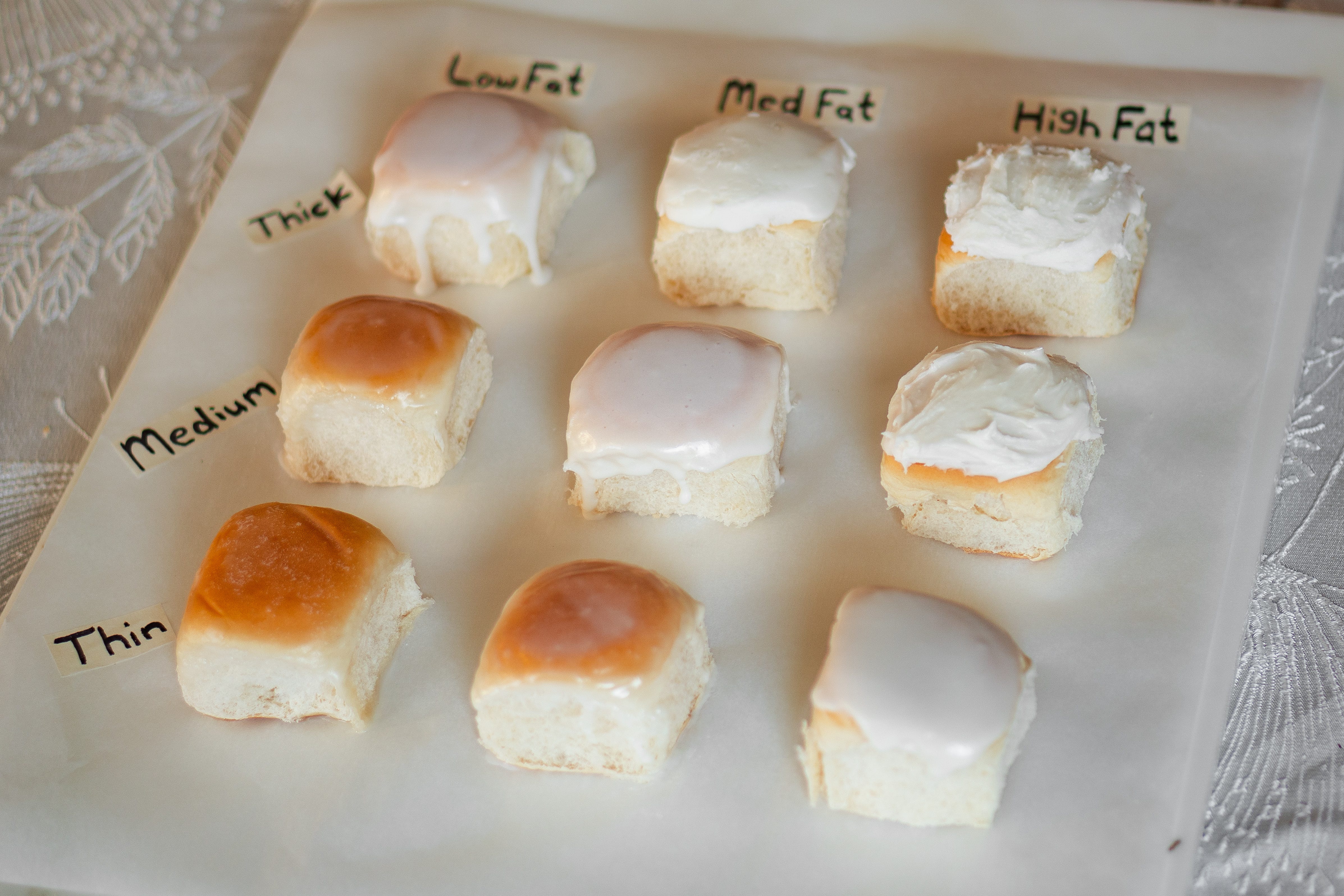
The Matrix
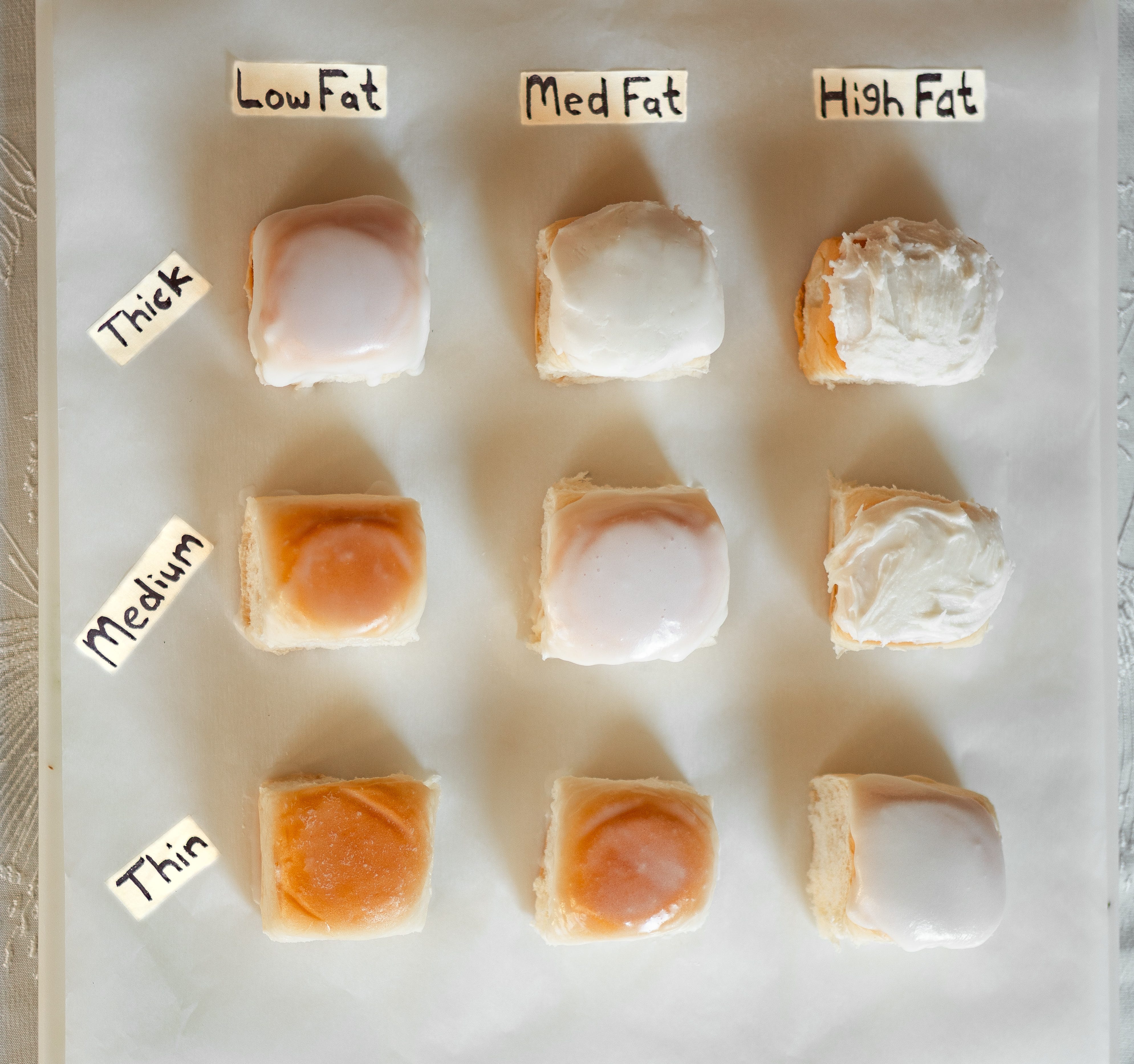
Across the top: fat level
Low fat
Medium fat
High fat
Down the side: glaze thickness
Thick
Medium
Thin
Each square is the same base dough, glazed differently, baked the same way, and allowed to set under the same conditions.
How to read it
Read it left to right if you’re thinking about richness.
Read it top to bottom if you’re thinking about flow and how the glaze will set.
Some immediate patterns jumped out to me:
Low-fat glazes can read very clean and reflective when thick, but that shine is surface-level and can turn plasticky if pushed too far.
High-fat glazes can read very glossy when thin, but an increase in thickness can mute shine quickly. They’re forgiving, but they skew matte and can feel heavy if you’re expecting a classic bakery finish.
Medium-fat + medium thickness is often the safest middle ground when you don’t want surprises.
Thickness matters more than ratios in some cases. A thin glaze with the “right” ingredients can still look dead if it sets too fast.
None of these are rules, just tendencies.
A few things this helped me unlearn (popular myths)
More sugar does not automatically mean more shine
Two glazes can look identical when warm and behave completely differently once set.
Milk doesn’t guarantee richness. It mostly changes how light moves across the surface.
The Matrix made these differences obvious in a way written recipes never really did.
How this fits into my process
This is the reference I wish I had during many baking sessions in the kitchen. Now, I can ask myself questions like:
Do I want this to drip or sit?
Do I want it to stay glossy after 10 minutes?
Do I need contrast against a darker bake?
Now I can answer those questions first and adjust accordingly.
Where this goes next
This is version one.
I’m sure I’ll revise it. I’ll definitely add more variables over time (temperature, sugar type, acidity).
If you’ve ever had a glaze behave strangely, or do something you didn’t expect—I’d genuinely love to hear about it! That’s how this gets better.
This guide is part of a larger body of work I’m building around repeatable baking systems.
The Bakerdex is an ongoing index of baking frameworks and applied guides. New entries are added periodically.
Related Bakerdex Entries:
The Bakerdex — Entry 02: Using the Glaze Matrix to Make Any Glaze
The Breakfast Nook is a reader-supported publication. To receive new recipes, helpful guides, and to support my work, consider becoming a free subscriber!